


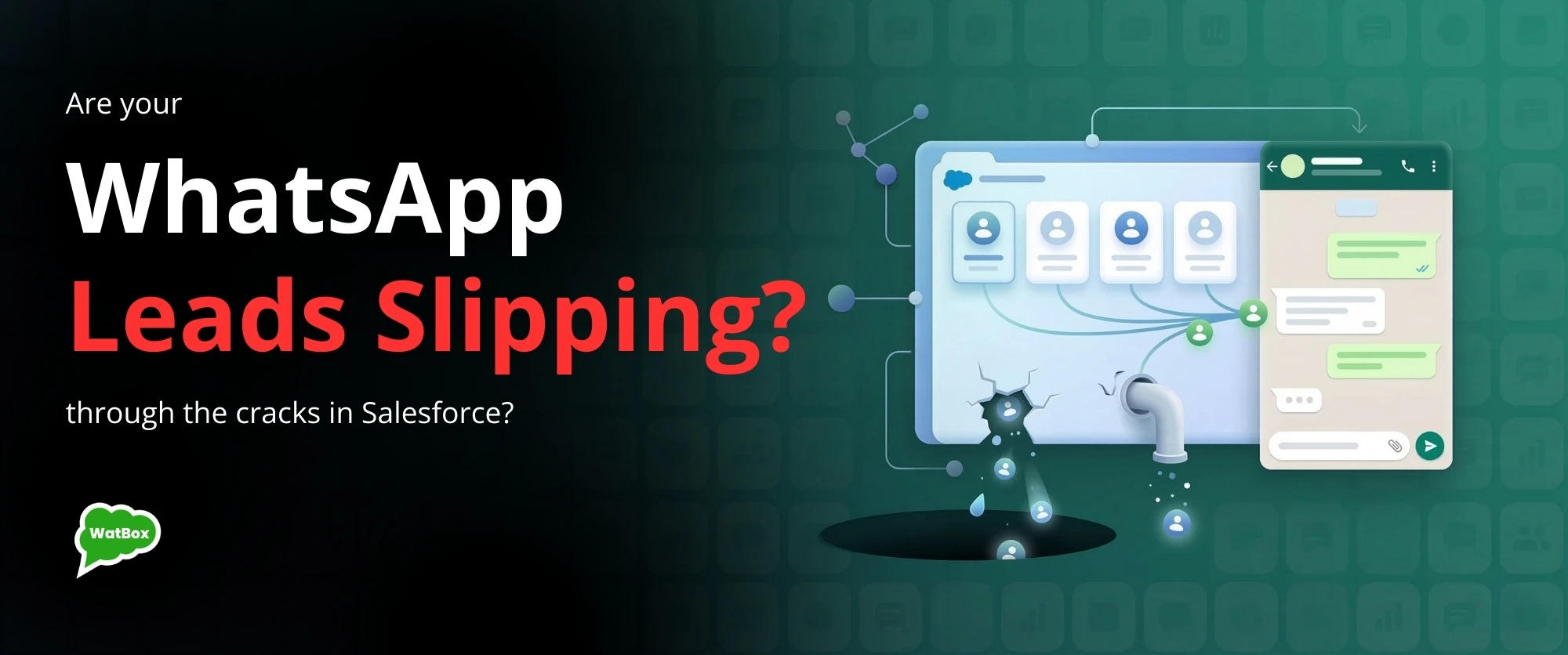

5 Reasons Why WhatsApp for Salesforce Is the Best Way to Stop Lead Leakage
Lead leakage is one of the most common problems we see in Salesforce environments. A lead comes in, sits in a queue, gets an email hours later, and by then the prospect has already moved on. From what we've observed working with sales teams, the problem usually isn't lead generation. It's response speed and communication channels. That's where WhatsApp for Salesforce becomes extremely powerful.
When we connect WhatsApp directly inside Salesforce, we remove the delays between lead capture and first conversation. As a product team deeply embedded in the Salesforce ecosystem, we've identified five architectural and operational reasons why native WhatsApp integration fundamentally stops lead leakage.
Reason 1: Instant Lead Response Improves Conversion Rates
The faster a sales team responds to a lead, the higher the chances of conversion. Yet in many Salesforce setups, leads wait in queues until a rep manually sends an email or makes a call. With WhatsApp integration with Salesforce , teams can trigger instant messages the moment a lead is created.
For example: A new website lead enters Salesforce. Instead of waiting for a rep, an automated WhatsApp message can immediately say:
"Hi! Thanks for reaching out. A member of our team will contact you shortly."
This simple interaction confirms that the lead was received and starts the conversation immediately. We built our native multichannel messaging platform so teams can send these messages directly from within Salesforce without switching tools.
Reason 2: Leads Prefer Messaging Over Email
Many modern buyers rarely reply to cold emails. Messaging platforms like WhatsApp feel more natural and conversational. When teams connect Salesforce to WhatsApp, they reach prospects in the channel people already check multiple times a day.
- A rep can send a quick product clarification.
- A customer can ask a question without booking a meeting.
- Follow-ups become short and conversational.
We've repeatedly seen higher response rates when teams use WhatsApp and Salesforce integration instead of relying purely on email sequences.
Reason 3: Conversations Stay Logged Inside Salesforce
Another cause of lead leakage is fragmented communication. Messages happen in personal phones, emails, or external chat apps, and the CRM loses visibility. A proper Salesforce WhatsApp connector keeps everything recorded inside Salesforce:
- Conversations are attached to the Lead or Contact record.
- Sales managers can see message history.
- Teams can track engagement across the pipeline.
This means if a rep goes on leave or changes roles, the conversation continues seamlessly. We engineered WatBox specifically to maintain CRM-level visibility and ensure unified communication directly within your Salesforce interface.
Reason 4: Automated Follow-Ups Prevent Leads from Going Cold
Sales teams are busy. Even with the best intentions, follow-ups get missed. When teams implement WhatsApp integration with Salesforce, they can automate follow-up messages based on Salesforce events.
Example workflows:
- A lead hasn't responded for 24 hours → trigger an automated reminder.
- Demo scheduled → trigger a confirmation message.
- Proposal sent → trigger a follow-up message after 2 days.
Instead of relying entirely on manual outreach, the system keeps leads warm automatically. Many teams explore these workflows using guides like the Watbox product walkthrough playlist to understand how automation works inside Salesforce.
Reason 5: Sales Teams Can Respond Directly From Salesforce
One of the biggest inefficiencies we see is reps jumping between tools:
- CRM for lead data.
- WhatsApp on their phone.
- Email for follow-ups.
This context switching slows everything down. When teams connect Salesforce to WhatsApp, they can send and receive messages directly inside the CRM interface.
- Respond to leads from the Lead or Opportunity record.
- See conversation history while reviewing deal context.
- Trigger templates or quick replies instantly.
This removes friction from the sales workflow and ensures leads are engaged quickly.
Conclusion
Lead leakage usually happens when there is a delay between lead capture and the first meaningful interaction. By implementing WhatsApp for Salesforce, teams can:
- Respond instantly.
- Communicate in the buyer's preferred channel.
- Keep conversations tracked in the CRM.
- Automate follow-ups.
- Reduce tool switching for sales reps.
When these pieces come together, fewer leads fall through the cracks and more conversations turn into opportunities.
If you are evaluating your communication architecture, we would be glad to provide a strategic review of your current setup and discuss how native multichannel messaging can scale your operations. You can book a consultation call with us book a free 30-minute call with our solutions team.

Level up WhatsApp Integration with Salesforce
Start with a 15 day trial for you to taste the CRM + WhatsApp interactions!